
"produced in Central America"
3000 article(s) found
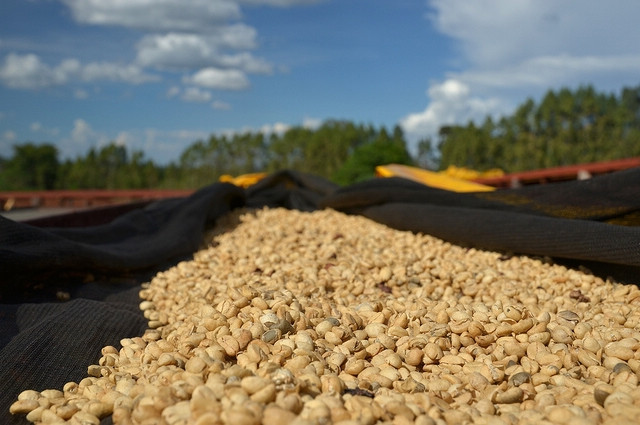
Royal Coffee processing Plant in St. Roman, a country grown in Central America, Tarazu, Costa Rica.
Costa Rican coffee cultivation was introduced by Cuba in 1779 and exported for the first time in 1820. There are about 32000 coffee farmers, with an average planting area of less than one hectare (10000 hectares) per farmer. Costa Rica has a population of 41 billion (2006), with a coffee planting area of 82500 hectares and an annual production of 1.7 million bags (60kgs per bag). The annual domestic consumption is 380000 bags.

Located in the middle of North and South America, the Guatemalan Coffee Waijangs Plateau
Guatemala is located in the center of North and South America, and its geographical location occupies an important position in Central America. Guatemala covers an area of about 108899 square kilometers. The land features can be divided into plateau volcanoes, lowland tropical forests, volcanic sandy shore plains along the Pacific coast, and virgin lands along the Caribbean Sea. The SierraMadre Mountains of Central America span east and west of Guatemala, covering an area of

Aromatic, pure Salvadoran Himalayan coffee Flavor Description Grind treatment Taste characteristics
El Salvador is tied with Mexico and Guatemala as the producer of Asa and Meldo, and is competing with other countries for the top one or two places in Central America. Highland origin, for the size of large coffee beans, fragrant taste mild. As in Guatemala and Costa Rica, coffee in El Salvador is graded according to altitude, with the higher the altitude, the better the coffee.

Coffee bean producing areas-Central America-Mexico (Mexico)
Well-known representative coffee: Mexico (Mexico) Malaggippe Mexico is close to the United States to the north. Its coffee production ranks fourth in the world, mainly produced in the southeast adjacent to the Vivette Nango highlands of Guatemala. Brother Mo, about 70% of his coffee is exported directly to the United States, which is washed and divided into three grades according to their height. Generally speaking, the evaluation of Mexican coffee is moderate.

History of fine coffee beans in Martinique, the birthplace of coffee beans in Central America
For professional baristas, follow the coffee workshop (Wechat official account cafe_style) Martinique, the cradle of American coffee. Martinique is a small island and the birthplace of Central American coffee, but it produces very little coffee today. The first coffee tree in the Western Hemisphere was created by Gabriel Mathieu de Clieu in the early 1820s.

Introduction to the History of Coffee in Martinique, the birthplace of Coffee in Central America
Professional baristas follow the coffee workshop (Wechat official account cafe_style) Martinique is a small island and the birthplace of coffee in Central America, but it produces very little coffee today. The first coffee tree in the Western Hemisphere was brought from France by Gabriel Mathieu de Clieu in the early 1820s. Good morning, Dirkley.
The birthplace of coffee in Martinique and Central America.
Martinique is a small island and the birthplace of coffee in Central America, but it produces very little coffee today. The first coffee tree in the Western Hemisphere was brought from France by Gabriel Mathieu de Clieu in the early 1820s. In his early years, Dirkley was a naval officer in Martinique. He brought back a coffee tree and planted it in Pritchell.

Description of Flavor of Hassanda Coffee Garden in Ecuador; characteristics of varieties in producing areas; introduction of fine coffee
Coffee began to flourish in Central America in the 18th century, and this important economic product originated in Costa Rica around 1840. Since Central America became independent from Spain in 1821, there has been a lot of war. Because Costa Rica was far away from Guatemala City, the capital of the Spanish colony at that time, it was not affected by the civil war. Instead, it was Guatemala and El Salvador that delayed coffee because of the civil war.

Introduction of Esmeralda Manor in Panama, the King of Coffee Price ratio in Central America
Panama Coffee, the king of coffee price in Central America, has been among the best coffee producers in the world since three years ago, surprising countries that have been in the vanguard of developer production for many years. Panamanian coffee is mainly produced in the west near the Costa Rican border, producing the best washed coffee. Compared with coffee beans grown at low and middle elevations

Characteristics of Guatemalan coffee beans in different producing areas Coffee bean flavor in each producing area of Guatemala
For the exchange of professional baristas, please follow the Coffee Workshop (official Wechat account cafe_style). There are seven countries in Central America, namely, Belize, Costa Rica, El Salvador, Guatemala, Honduras, Nicaragua and Panama. All seven countries in Central America produce coffee, among which Guatemala, Costa Rica and Honduras are global coffee exporters.

World Coffee Map-- A Collection of Information on Coffee producing areas in Central America and Nicaragua
Communication of professional baristas Please pay attention to Coffee Workshop (Wechat official account cafe_style) Nicaraguan coffee is mainly produced in the central and northern parts of Nicaragua, covered with volcanic ash and shaded by trees, resulting in high-quality Nicaraguan coffee, which has a mediocre, mild flavor and is suitable for mixed coffee. Shade planting is its characteristic, while coffee beans are washed and dried in the sun.

Map of Arabica Central America what coffee beans does Starbucks use illy coffee belongs to what grade
Professional coffee knowledge exchange more coffee bean information Please follow the coffee workshop (Wechat official account cafe_style) in the morning there is a long line at the counter, waiting for the coffee to be ready and empty by the way, while getting the coffee, I can't help but take a sip, the moist aroma rushed into the nasal cavity, the warm hot flow entrance, the head and body instantly heated and turned on, one day.

The Salvadoran coffee producing area located in the northwest of Central America introduces the IzaIco region of Sonsonate province.
An appropriate description of the flavor characteristics of Salvadoran coffee should be nothing more than a moderate, slightly thinner viscosity, pleasing softness and sweetness, coupled with attractive fruit aromas. When tasting El Salvador, you can put the right amount of sugar into the coffee, add ice, stir it well, and add fresh milk according to your preference, so you can enjoy it slowly.

Introduction to Panamanian coffee beans with the name of the king of coffee sex-price ratio in Central America.
Panama Coffee, the king of coffee price in Central America, has been among the best coffee producers in the world since three years ago, surprising countries that have been in the vanguard of developer production for many years. Panamanian coffee is mainly produced in the west near the Costa Rican border, producing the best washed coffee. Compared with coffee beans grown at low and middle elevations

What about Guatemalan coffee? what are the characteristics of Guatemalan coffee beans from Central America?
Coffee workshop (Wechat official account cafe_style) Front Street-Guatemala Coffee introduction Guatemala is bordered by Mexico to the north, Honduras and El Salvador to the south, the Caribbean to the east and the Pacific to the west, making it rich in tropical rain forests, volcanic geology, plateau valleys and ever-changing micro-climate. Guatemala horse

The delicious coffee producing countries of North and South America and Guatemala introduce the processing methods of fine coffee.
Guatemala is located in the center of North and South America, and its geographical location occupies an important position in Central America. Guatemala covers an area of about 108899 square kilometers. The land features can be divided into plateau volcanoes, lowland tropical forests, volcanic sandy shore plains along the Pacific coast, and virgin lands along the Caribbean Sea. The SierraMadre Mountains of Central America span east and west of Guatemala, covering an area of

Introduction to the characteristics of coffee price and flavor in which countries in Central America produce coffee
The most sensible and practical way to understand coffee-producing countries is to classify them into the world's three major coffee growing regions: Africa, Indonesia and Central and South America. Generally speaking, coffee grown in the vicinity has similar characteristics. If a particular bean is out of stock, the manufacturer and buyer of the comprehensive product will usually look for a nearby country. People who make comprehensive products will say: I think

Characteristics of coffee beans from three regions-Characteristics of coffee beans from Central and South America
Characteristics of coffee beans from three regions-Characteristics of coffee beans from Central and South America Arabica Arabica beans, world-famous blue mountain coffee, mocha coffee, etc., almost all Arabica species. Appearance: bean shape smaller, positive was long oval, narrow and tortuous cracks in the middle, beans back arc shape more flat, consistent size, uniform color luster. Origin: Arabica coffee

Brief introduction of Santa Barara Manor in San Juan Heido region of Honduras Coffee Bean in Northern Central America
In Honduras, coffee-producing areas are divided into six major areas, spread to the west and south, namely Santa Barbara (Santa Barbara), El Paraiso (El Paraiso), Copan (Copan), La Paz (La Paz) and Comayagua (Olan Mound), with an average planting height of more than 1100 meters above sea level. The variety of coffee is Elaraby

Nicaragua, the poorest country in Central America, cultivation of coffee on the estate Climate Altitude
Among them, in Costa Rica, where the government strictly controls water use, coffee farmers have created honey treatments named after the retention of "different thickness of pulp", including yellow honey, red honey, and black honey, which was once the name of Costa Rica's COE champion La Brumas de Zurqui. Traditionally, Nicaragua